Tuesday, October 7, 2014

American Hook Up Culture: Nothing New?

Going from a small university town to a large one, I continually find myself in a state of culture shock -perpetually surprised by my new classmates' liberal lifestyles. And while many of the changes are refreshing, there is one that I find myself butting heads against: the quote-on-quote Hook-up Culture.

While researching this romanticized lifestyle, I was shocked to discover that the history of this no-strings-attached approach to love actually extends back much further than the Summer of Love of the 1960s. Rather, it began in the nineteenth century! 


Nineteenth Century Free Love 
The 'first wave' of America's Free Love Movement is said to have arisen in the mid-nineteenth century, when this country was caught up in the sweep of spiritualism. Despite it's rather scandalous title, though, the idea behind the Free Love Movement was to challenge the cold, business-like institution that was the traditional marriage. (The entire concept of two individuals marrying for love was still alien to Western culture at this time.)

Being a Free Lover typically meant that an individual could/would "freely choose a monogamous sexual partner and to freely choose to end a marriage or relationship when love ended" (Johnson Lewis). A concept called 'voluntary motherhood' was also introduced.

One of the Movement's first, and most famous, pioneers was a woman named Victoria Woodhull -the woman who would later be nominated by the Equal Rights Party to be their candidate in the 1872 presidential election (against Frederick Douglass and Ulysses S. Grant). In her own words:

victoria woodhull-1
Victoria Woodhull
"Yes, I am a Free Lover. I have an inalienable, constitutional and natural right to love whom I may, to love as long or as short a period as I can; to change that love every day if I please, and with that right neither you nor any law you can frame have any right to interfere." 

 While the majority of the nation was under the impression that the Free Lovers were trying to promote promiscuity, the exact opposite was actually taking place. Rather, the Free Lovers considered themselves to be the practitioners of a new, modified kind of sexual morality: "one that was based on a freely chosen commitment and love, instead of legal and economic bonds" (Johnson Lewis). To the women of America, it promised an alternative -if not protection -from the shackles that was the average, accepted marriage at the time.

Twentieth Century Free Love
Between the 1960s and the 1970s, a new form of Free Love spread across America. Now interested in the hands of hippies and beatniks, the movement "came to imply a sexually active lifestyle with many casual sex partners and little or no commitment" (Johnson Lewis).

All the previous teachings and goals of the original movement were perverted, remolded into but another way for the American Youth to say "F*** the Man!"

The country, obviously, has never recovered.

Millennial Century Free Love
In a number of ways, the form of Free Love that is practiced in America today very much mirrors that of 1960s and 70s. Young adults, predominately between the ages of 17 and 25, venture into college and -the majority -embrace all of its possibilities. The biggest ones being parties and sex.

(After all, why not? Mom and Dad are not around to tell you 'no'!)

The most immediate results: dating and other relationship-building rituals are steadily dying out.

Marriage rates continue to steadily go down, year after year, as the younger generation thrives on the hedonistic promises of their media-driven society -a great promoter of the lifestyle.

America is slowly being redefined as a No-Strings-Attached culture.

My Views
Despite being a feminist, I find it hard to agree with the contemporary doctrines of Free Love -of hooking up, of participating in casual sex. Perhaps I can blame it on my Christian upbringing, or my fascination with BBC [period] movies; but the lifestyle both sickens and worries me.

As it was explained to me by a close friend, a fair number of young adults who dilly-dally in this particular culture are ones who -in some ways -are trying to find an alternative route to coping [with] or overcoming a sour dating/relationship history. 

This argument, I can understand. After all, I myself have a rather unpleasant dating resume. 

And yet, I remain unmoved. 

While I believe that the original ideology of the Free Love Movement is amiable, the version that my peers practice is upsetting. And not just for me.

As noted by Allie Bukatman from the blog Elite Daily:

"Our generation is so afraid of commitment, interpreting it as the be-all, end-all in life. We’re afraid of allowing ourselves to actually like someone, but why?"

Has sex really become such a cheap experience? What happened to it being a profound display of love and admiration? 

For me, my stance is based on a need for two things: (1) respect and (2) legitimacy. I am not in the market for a stuffed dog (a Sun Also Rises [Hemingway] reference). Having respect for myself as well as for my partner creates a legitimate experience, a genuine relationship.

Shania Twain said (sang) it best:

"If you're not in it for love,
if you're not in it for life
Let me make it clear 
to you, my dear
...
I'm outta here!"


Work Cited

Bukatman, Allie. "The Hook-Up Culture Has Killed the Possibility of Dating in College."  
             Daily Elite, 2 April 2014. Online. 6 October 2014. 

Johnson Lewis, Jone. "Free Love in the 19th Century." About Education, 2014. Online. 6
             October 2014.  

Maggie Evans: An Underrated Heroine

Vintage TV Fan
Maggie Evans, portrayed by Kathryn Lee Scott
There are a number of strong female characters featured in Dan Curtis's original daytime gothic soap opera "Dark Shadows" (1965-1971). But sandwiched between the rigid matriarch (Elizabeth Collins) and the spunky governess (Victoria Winters) remains a continually overlooked heroine: the determined and strong-minded Maggie Evans -one of the first victims of Barnabas Collins.

The Backstory
For those who have not yet seen the television show, or Tim Burton's rendition of the story, the overall plot of "Dark Shadows" can be summarized as thus: Set in 'modern-day' Collinsport, Maine, the vampire Barnabas Collins has been awakened from his tomb after more than two hundred years of imprisonment. Disguising himself as a distant cousin among his contemporary descendants, the dark and tortured being seeks to regain all that he had lost in his previous life. 


Maggie
Maggie, standing in front of Josette's portrait.
After meeting Maggie Evans -who bears a staggering resemblance to his former love, Josette DuPres -Barnabas works to bring the young woman under his thrall and to groom her to be his -you guessed it! -vampire bride. Shot from 1966-67, a fair selection of episodes from the show were dedicated to this storyline -which has since been nicknamed by fans as "The Kidnapping of Maggie Evans."

Maggie as a Heroine
Admittedly, based on the description above, the character of Maggie does not sound or appear particularly unique when compared alongside modern vampire-story heroines such as Sookie Stakehouse ("True Blood") and Elena Gilbert ("The Vampire Diaries").

What needs to be remembered, however, is that Maggie stands among the female archetypes in her genre. That is, she was one of the first females to resist the power of the male vampire and to fight to retain her sense of agency. Not even Mina Murray from Bram Stoker's Dracula can claim such a feminist achievement -despite her being a rather progressive character for her time in literary history.


Despite the strength of Barnabas's mind control powers, and his determination to break and remold her, Maggie's subconscious continued to fight back. Even after breaking his spell, under the threat of death, she could not force herself to succumb to her captor's will.
  
Maggie knew who she was; and she was not Josette -no matter how much the two women looked alike, or how much Barnabas wanted her to be. 

Even for the 1960s, the idea of a woman having more strength than her male superior/oppressor -if only in the psychological sense -was not looked upon too fondly. Back then, still, women were being groomed by their mothers, their society(s), and even their men to fit within a certain mold, a certain image.

Today, autonomous women still find themselves fighting against the vampiric thrall of it all (mothers, societies, men). Magazines, television, and other media tell us what to wear and what to do -primarily in order to please our men. The temptation to give in, at times, can be strong; especially if the promise of love is dangled in front of us. 


Be like Maggie: Don't give in! Don't change who you are (your legitimate self) to be a poor man's (a poor vampire's) Josette. 

One of the worst things a girl, a woman can allow herself to do is to be in a relationship that forces her to compromise any and all sense of agency. 

Be a Maggie Evans; not a Bella Swan. (But I shall save my Twilight rant for another day.)

Monday, October 6, 2014

'The Virgin' and 'The Slut': Exploration of an Old Dichotomy

"Miley Cyrus vs Joan of Arc" (featured below) is the thirty-sixth episode in the popular YouTube series "Epic Rap Battles of History" (or "ERB"). While darkly comedic but undoubtedly entertaining, this video is an excellent artistic example of the old 'Virgin/Slut' dichotomy that still plagues the modern women of today. 


Yes... 'Who won' indeed?...

If one were to base the answer of that question on the teachings of society, Joan of Arc would be the winner. 

Why?

Well, despite her [portrayal's] colorful use of language ('bitches' and 'skank'), Joan stands tall on one of the highest of pedestals: the one reserved for the most virtuous of women. Over the course of history, such a ranking has consisted of a type of woman known as 'the Virgin.' 

And as the yin must always have a yang, the opposite of such a female -the one who dwells in the filth and shadow of the pedestal's base -is 'the Slut.'

Early Classifications
The classifications of 'the Virgin' and 'the Slut' have existed longer than the rules of civility  of the 1950s/60s or the 'True Cult of Womanhood' in the Victoria Era.

The expected characteristics of a Virgin, in general, are as follows:
  • sexually 'pure' / 'untouched'
  • refined and poised
  • practices Church doctrine
  • subordinate to males
In contrast, a Slut is generally characterized as thus:
  • sexually 'active' / 'promiscuous'
  • crude and chaotic
  • blasphemes Church doctrine
  • insubordinate to males 
Joan: A Virgin?
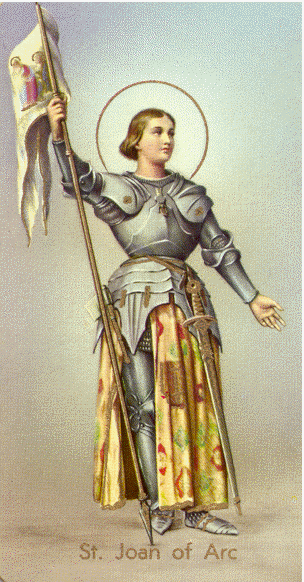
Joan of Arc is a saint: there is no dispute on this point. Canonized by Pope Benedict XV in 1920, she is recognized by the Catholic Church as the patroness of soldiers and France. 

Born during the Hundred Years War, a bloody skirmish between the British and the French, Joan was raised to be an obedient daughter -both to her parents and to God. In her early teens, she began to hear voices -those of Saints Christopher, Catherine, and Margaret.

As the legend goes: one day the voices of the saints told Joan to leave her childhood home, raise up an army, and crown the dauphin king. Being faithful to these orders, Joan did everything she was told. As a result, however, she would eventually be captured by the British and charged as a witch. Instead of attempting to rescue their heroine, France abandoned Joan.

She was burned at the stake on May 30, 1431 -at the age of nineteen.

Ironically, Joan might have fallen into the category of 'bad girl' in her day and time. She fashioned short hair and a knight's uniform. She claimed to hear divine voices and to be the savior of France. She wielded a sword and led an army. Worse, though: she stood up to her superiors and other men of the time (*gasp!*). Were it not for the sake of miracles or a prophecy (about the coming Maid of Orleans), she might have been locked up in nearest lunatic asylum or burned by her own countrymen.  

And yet, she is a saint...?

Well, she was a martyr and a virgin...

Miley: A Slut?
Miley, "Before"
To further the comparison between her and Brittany Spears, Miley Cyrus is certainly an example of a pop icon 'gone bad.'

Granted, much of an entertainer's reputation is formulated by media. Taking this fact into account, however, can it be right to say that Miley could merely be a victim of bad press? 

Maybe yes; maybe no.

It all started with a haircut; then came the twerking. Within just a short amount of time, the preteens of today lost sight of the Hannah Montana star that they had come to adore.

Miley, "After"
In theory, Miley had a meltdown. Like so many of the child stars who came before, she became crushed and lost under the expectations of the entertainment industry and her idolizing fans.

Hannah Montana was the character, the identity that Miley -the girl -was saddled with. Perhaps it was fine for a while; but then the girl had to grow up and shed the skin that was the fictional her. 

Surely, though, the real Miley could still be a role model for her young fans -through music, if not also in acting. But the new and radical Miley only stirred the pool of controversy. 

Suddenly, no one could control her. She became a forest fire. (Or, rather, a wrecking ball.)

Drugs, vulgarity, and sex: Hannah Montana was officially dead.

Personally, I agree with the latter theory, though. Maybe Miley wanted to grow up; maybe she wanted to be taken seriously. If such is the case, however, I have only this left to say on the matter: Miley, honey, the twerkin' ain't workin'!


"Virgin/Slut": A Dichotomy for the Postmodern Age?
Sadly, for a number of people, the ideas imposed by the 'Virgin or Slut' culture are a popular inheritance -passed down by parents and enforced by certain communities. But does that mean that they (these ideas) belong in this postmodern age?

Surely, by now, it has been established that the modern female should be free to create herself however she sees fit. 'Free,' that is, in the traditional and idolized sense: without ridicule.

The girls of today need role models, something or someone to aspire to. 

As a result: The Virgin (Joan), for now, will continue to win.

Monday, September 15, 2014

What if we lived in a world where . . . ?

While attending a movie festival a few years ago, I was fortunate to view a selection of short, thought-inspiring films; a selection that included the video located below. This film -"All You Need Is Love?" -takes the modern-day social conflict of homophobia and reverses it. Rather, the story focuses on a young girl's sexual awakening in a world that condemns, not homosexual, but heterosexual relationships.

And now, I invite my reader(s) to have a similar eye-opening experience:


Exploring Gender and Sexuality in Farizan's IF YOU COULD BE MINE


One of the highlights of my attending the Austin Teen Book Festival back in 2013 was meeting Sara Farizan, the author of If You Could Be Mine -an eye-opening book about homosexuality  and trans-identity. 

Prior to attending the event, I had the opportunity to read about Farizan and her book in an article on the NPR website. In the short biography provided in the article, I learned that Farizan is, herself, a homosexual and has battled not only psychological and social criticisms over the years, but also cultural. (Being the daughter of Iranian immigrants, it is understandable why an adolescent Farizan might have feared abandonment by her parents and relations on the basis of her sexuality.) Extracted from her interview with NPR, the following is what Farizan had to say in relation to her sexual identity:


Sara Farizan


"The problem for me was that I realized from a very young age that I was gay, or at least had same-sex attractions that weren't going away. And I really struggled with that, and I was very closeted for about six or seven years, where I was just outside very bubbly and happy, and inside was very angry and sad and didn't feel like I could talk to anyone, based on where my parents were from. ... It's a very taboo subject in the Persian community..."


Although it is not mentioned in the NPR article, the dedication at the front of the book does suggest that Farizan did eventually find the acceptance and support she sought from her parents to explore her sexual identity. Today she does so while also reaching out to other homosexuals (not exclusively lesbians) through young adult fiction.

If You Could Be Mine is her first published work.

Book Summary
Sahar and Nazrin have been inseparable since childhood. Now teenagers, in modern-day Tehran, their friendship has escalated to love -of the forbidden variety. But when Nazrin's arranged marriage threatens to separate them, Sahar seeks and discovers what seems to be the ideal solution: gender reassignment. When questions about her own identity comes into play, however, Sahar begins to question her own motives to undergo the surgery.

Reader's Response
As someone who identifies herself as being a heterosexual female, I do not claim to understand first-hand what it must feel like to be persecuted -both inwardly and outwardly -for my sexuality. Having read Farizan's book, however, the ability to see both forms of crisis through the eyes of the main character (Sahar) has helped to strengthen my empathy.

As previously mentioned, this book creatively touches on both homosexuality and trans-identity. In an attempt to preserve her relationship with her lover, Sahar entertains the idea of subjecting herself to sexual reassignment. This pursuit, in a number of ways, exposes deeper layers of dilemmas involving identity and gender.

In Farizan's words:


"I think the longer people read it [the book], they'll see that there's a great distinction between gender identity and sexual orientation. I think Sahar realizes that, too ... through meeting other transsexual characters — some who are very confident and very happy and are actually trans, and then some who have kind of undergone the gender reassignment because they feel like it's their only option. So it brings up a lot of questions, the book, but I don't think it gives a lot of definite answers."

Much to this reader's horror, along with the protagonist's, a section of dialogue included a rather graphic description of what a transgender individual (once he or she is approved for gender reassignment) must go through, surgically, to achieve physical transformation. . . 

To think that, at any minute, someone out in the world is preparing to or is undergoing such a procedure. . . 

The mental images left by the description are too much.

A surprising element, for me, came in the form of a possibility that I had never considered before: the shunning of homosexuality by transgender individuals! At first, the hostility expressed by one transgender, the character of Katayoun, toward the protagonist made little sense -to both Sahar and me. What Katayoun had to voice on the subject: "'I am not like them [homosexuals]!... What they do is unnatural... My illness in treatable. Their malady is a bargain with the devil.'" (150-151)

For someone who, herself, once experienced feelings of persecution and displacement, would it not make sense for Katayoun to empathize -better than I, at least -Sahar's plight?

But there, again, enters the dilemma of sexual orientation and gender identity: Can a person born as a man, but who identifies himself as a woman, understand a woman who freely expresses physical attraction toward her own gender? 

In the case of the character Katayoun from Farizan's novel, the answer would be 'no.' 

Possibly, though, such a negative reaction could be a result of cultural upbringing. In Iran, after all, it is forgivable to be a transgender. To be a homosexual, on the other hand, is a crime punishable by death.

Closing Thoughts
For my first exposure to gay/lesbian literature, Sara Farizan's If You Could Be Mine was an enlightening experience. For anyone who is curious or interested, I highly recommend it.

To read the full NPR feature on Sara Farizan, please click here.

"You go, girls!"

Sex is biological; gender is choice. As someone who did not choose to be born a female, there is much for me to admire and question in a person who pursues the path -both physically and/or psychologically -to become one.

Across the globe, the woman is a victim; a victim of various forms of oppression: sexual exploitation, genital mutilation, political under-representation, education deprivation, and considerably more. 

From the highest to the lowest of civilizations, however, the male can also be seen as oppressed. The transexual male, perhaps, being the most persecuted of them all.

This is a post about gender self-identity. It will reflect mostly on my observations and thoughts that surfaced after reading a biographical case study that was written by the open (proud-proclaiming) transgender Betsy Lucal, titled "What It Means to Be Gendered Me: Life on the Boundaries of a Dichotomous Gender System." 

Blending / Bending
THE BLENDER: For the majority of my life, I have been a gender blender. As both a child and a teenager, my closet was filled predominately with jeans and t-shirts. In the third-grade, while my female peers were playing braiding each other's hair by the jungle-gym, I took to trading Pokemon cards with the boys. When most girls were developing crushes and practiced dating, I watched Dragon Ball Z and mimicked masculine toughness ("You talkin' to me?"). 

True, I hardly felt at home amongst my own sex; but that did not mean that I identified myself as a male. I was one of the guys, but I was not a guy. Looking back, dressing like a boy was my way of finding acceptance. It was not until the later part of high school, however, that I began to pay attention and invest in my femininity.

THE BENDER: Lucal, in contrast, is a gender bender. Although born into the body of a man, she came to recognize and develop (re-shape) her inner gender identity as a woman. Naturally, as her body was built larger and taller than the average female frame, many members of society failed to look beyond the exterior and perceive the gender cues Lucal used. 


"My gender display -what others interpret as my presented identity -regularly leads to misattribution of my gender. An incongruity exists between my gender self-identity and the gender that other perceive." (Lucal 787) 


This incongruity is Lucal's lack of a groomed feminine exterior. The absence of such things as makeup and pumps causes onlookers to raise an eyebrow on such occasions as when Lucal uses her credit card or the ladies' restroom. What she sees as normal to herself, the world perceives as a joke or a perversion. 

"Vagina envy"
To often help explain the aggressive demand by women for equality (in comparison to their male counterparts), patriarchy members will recycle an old Freudian term: castration complex (i.e. 'penis envy').  In essence, the argument insists that a woman who hates herself will covet the image, the symbol of man. 

But what is a man? 

For a number of women, man could be the embodiment of freedom; freedom, that is, from social and physical persecution and/or restriction. To envy this, however, claims the patriarchy, is childish. 

But does not the average patriarchal society tend to shame women, to make them hate themselves and their bodies? 

Men, too, however, are not safe from the pressures of fitting within a mold. Males are expected to be buff, to resent the feminine. When they do not, social shunning may take place. 

In reverse, for a man, the woman might appear as the symbol of beauty, of divinity. (An outlook that can prove potentially dangerous, depending on the male and his urge to conquer.)

But where might the transsexuals exist in correlation to the condemned woman and the shunned male mentioned? 

In the article "From Official Transexuality to Transexualities," Berenice Alves de Melo Bento provides a plausible insight:


"The transexual experience revises [the penis envy theory]. Penis envy become, metaphorically, 'vagina envy.' The penis (the universal signifier) loses its power and is transformed into 'something that will not let me live.'" (371)

For the transexual, the penis therefore is an obstacle. But the loss of that obstacle, as even Lucal hints at, would strip the transgendered male of her reserved male rights and make her additionally vulnerable to gender-violence.

A Plea for Transcendence
For a heterosexual female, the vagina can be seen as a source of damnation. And yet, for the transgender female, a penis keeps her from living. True, the struggles are physically different; but at heart, they are not. At the center of it all, both identities one thing: to be relieved of the pain the body and one's society places on them as women.

In a century of so many broken archaic boundaries, surely humanity can do with the loss of one or two more. 

Reflecting back on my previous article pertaining to Plato, I pose this question: Might it not be time that society take aim for transcendence?

And to all my hetero and trans sisters out there: you go, girls! 

Keep fighting for the right to be a woman!


Work Cited

Bento, Berenice Alves de Melo. "From Official Transexuality to Transexualities."
           Sexuality, Culture and Politics - A South American Reader (2013). 366-389. Print.

Lucal, Betsy. "What It Means to Be Gendered Me: Life on the Boundaries of a Dichotomous
           Gender System." Gender and Society 13.6 (Dec. 1999). 781-797. Print

Got Transcendence?


The road of female persecution does not lead to Rome. Rather it can be traced further back to Ancient Greece, to the lecturing halls of one of civilization's most respected thinkers: Plato. He, the Father of Western Philosophy. . . and the recognized enemy of most feminists.

In her article "Woman as Body: Ancient and Contemporary Views," Elizabeth V. Spelman walks the reader through Plato's views on and arguments against women. Overall, Plato's negative stance against the fairer sex had much to do with his view that woman were too fond of the earthly aesthetic to seek the reward of celestial knowledge. 

Plato favored mind over body, spirit over vessel. To be part of the world, to him, meant to compromise the freedom of the soul and mind for the empty promises of the world.

Women, as Plato viewed them, allowed their minds to become too distracted by the cultivation of physical beauty to attain intellectual enlightenment. In essence, women were the symbol as well as the product of the earth. 

From his resentment for the earthly and synthetic, Plato developed an ideology best known as 'mind/body dualism.' Simply, the core concept of Plato's mind/body dualism is that the focus and nurturing of one's mind will, in turn, feed and liberate the soul; whereas the focus and nurturing of one's body will lead to the crippling and enslavement of one's self to the dominating world of the superficial.

Quoting Spelman: "According to Plato, the body. . . keeps us from real knowledge; it rivets us in a world of material things which is far removed from the world of reality; and it tempts us away from the virtuous life." (111)
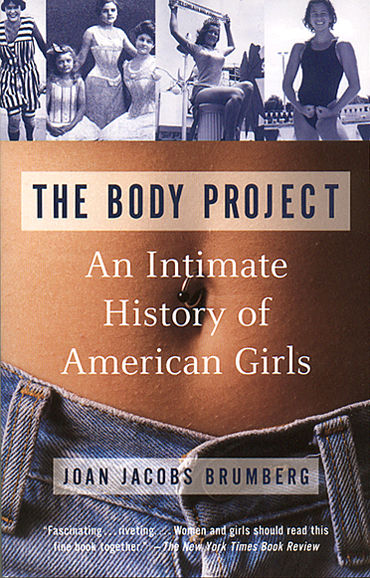
. . . A recommended read that chronicles
the shifting body image of women in
Western civilization since the
Victorian Era.

But despite his misogynistic leanings, did Plato think it possible for women to be virtuous? In fact, yes.  As Spelman notes, Plato implants within his dialogue Meno the belief that virtue is virtue; it is not and cannot be defined by sex (i.e. 'man's virtues' and 'women's virtues'). (117) 

Possible, yes. Capable. . .? Perhaps not.

". . .[T]he body, or the irrational part of the soul, is an enormous and annoying obstacle. . ." (113)

Whether in Ancient Greece or Postmodern American, the female body being a quote-on-quote obstacle is a fair accusation to make.

But at what point, at what level, can a woman consider herself above Plato's low and (rather) degrading expectations?

To answer this question, Spelman channels the famous female philosopher Simone de Beauvoir: "Although de Beauvoir doesn't explicitly say it, her directions for women are to find means of leaving the world of immanence and joining the men in the realm of transcendence." (121)

Transcendence, according to Dictionary.com, means "the quality or state of being transcendent"; which then translates further to "going beyond ordinary limits; surpassing; exceeding." 

But how does the modern woman reach transcendence in a global society that invests in and feeds on her insecurities? Constantly, from billboards to commercials, the average female is bombarded with ads centered on dieting and beautification. Rarely does a promotion that advocates education and culture find dominance in that 30 second time gap between show and movie segments. 

The bullying of magazine articles also attributes to this harmful conditioning: the rating of celebrity attractiveness; tips on perfecting makeup application; the comparing of fashion trends; etc. Over and over again, provocative images and oversize headlines prove distracting to focus and progress -mentally or physically. 

Society reduces women from people to products, from beings to dolls. Still tied to the primeval symbol of Mother Earth, we are each seen as but plots of land for a man to conquer and possess.

"You are not an accident." The Way I See It #92So where then do we turn? What must we do to elevate ourselves? 

We should start at the heart of it all: ourselves. 

Until we tune out the distractions and focus on more intellectual and spiritual riches, we will remain but subordinates to our surroundings.

Once again referencing de Beauvior, Spelman councils that "woman's emancipation will come when woman, like man, is freed from this association with. . . the less important aspect of human existence." (120)

And the "less important aspect" that she is alluding to...? The human body.

The female body.  


A woman in harmony with her spirit is like a river flowing. She goes where she will without pretense, and arrives at her destination prepared to be herself and only herself.


Work Cited

Spelman, Elizabeth V. "Woman as Body: Ancient and Contemporary Views." Feminist 
                Studies 8.1 (Spring 1982). 109-130. Print.